2024 Honouree
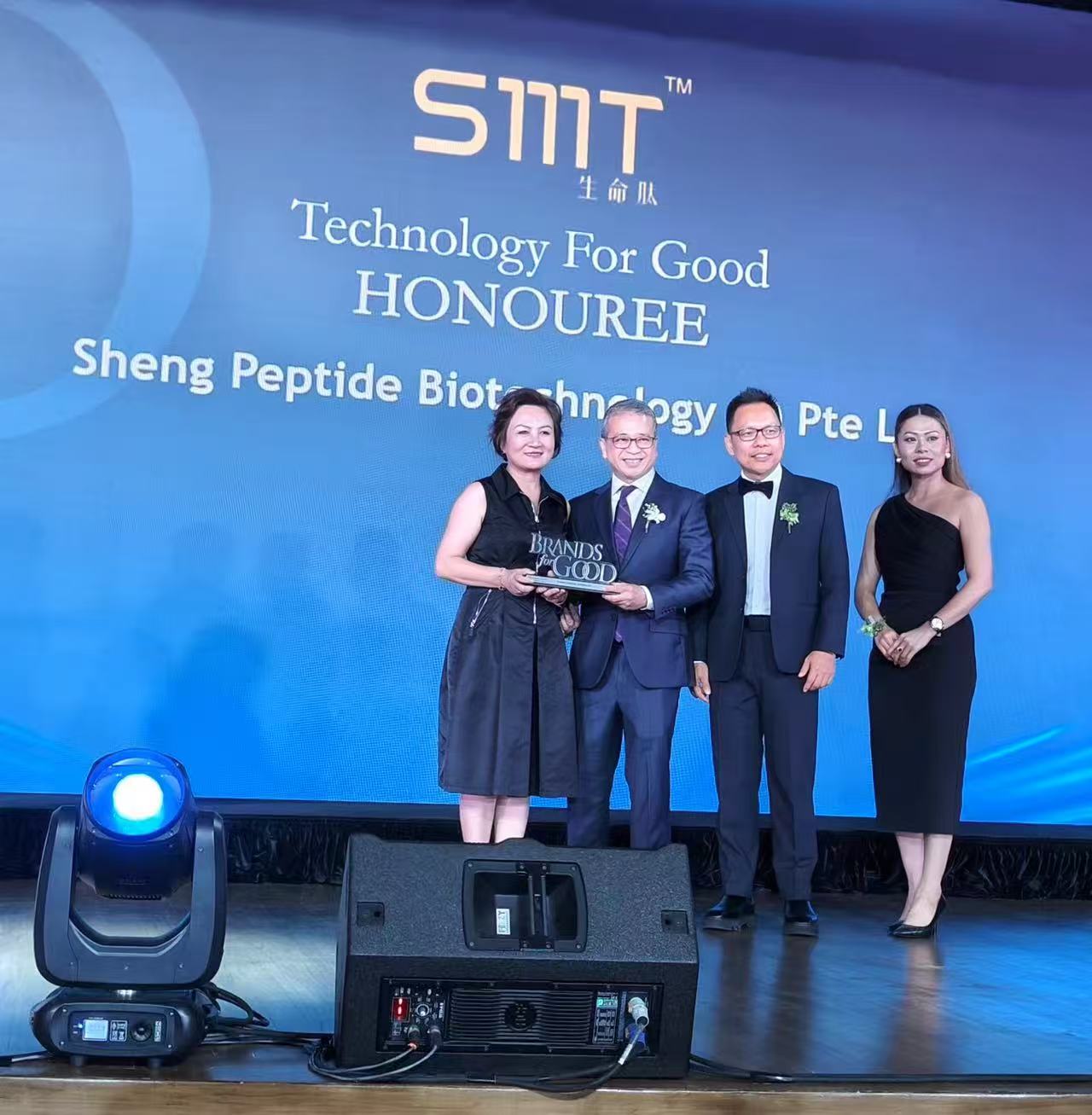
Technology for Good2024 Award Honouree
Recognised at the 2024 Technology for Good awards for bringing science-backed cellular wellness to communities.
Official Award Page ↗Patents, awards and independent laboratory testing — transparency in every detail.
Invention Patent
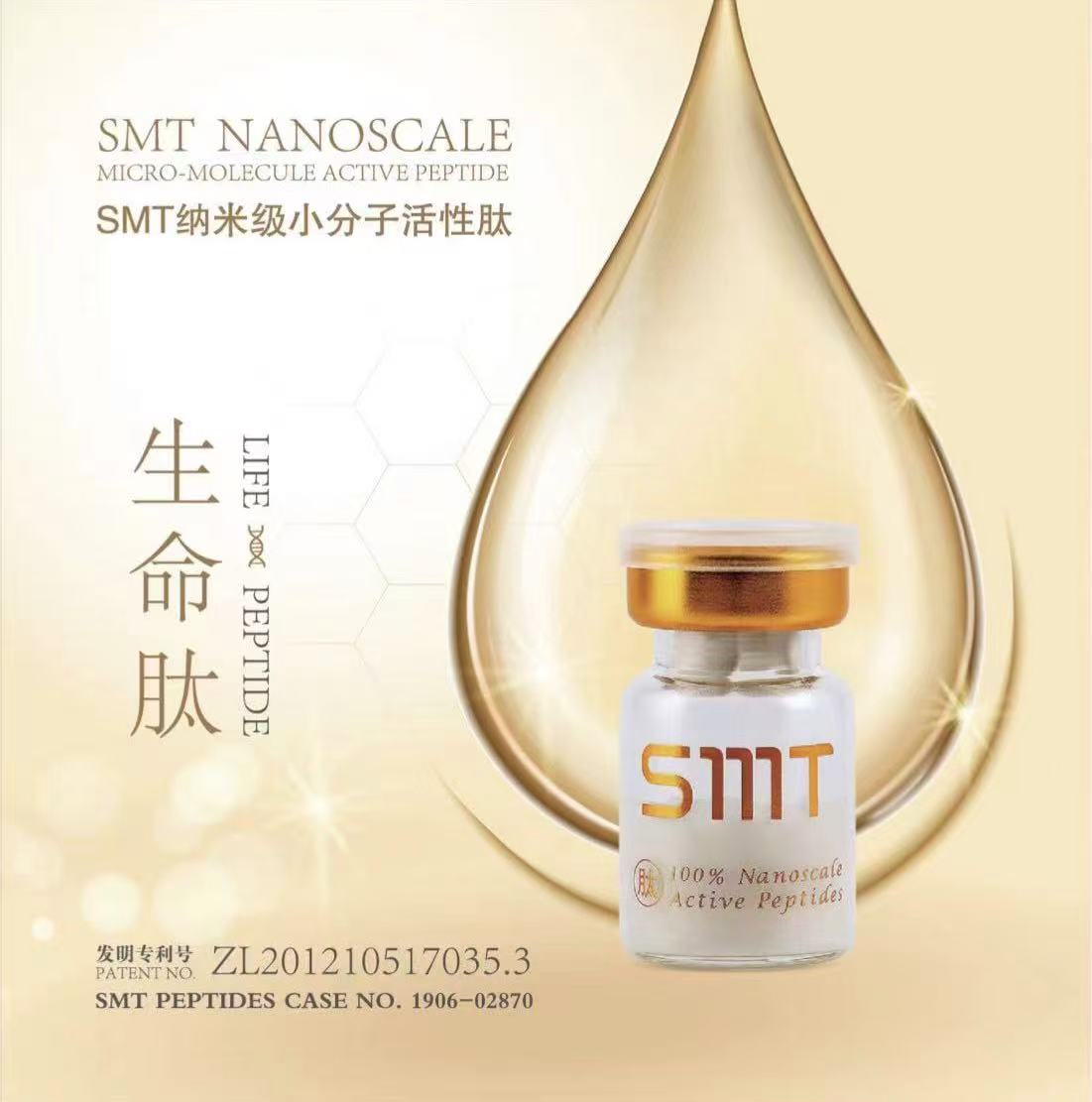
SMT nano-scale micro-molecule active peptide — produced through enzymatic hydrolysis powered by a patented collagenase-producing strain (China invention patent).
A granted invention patent means the core technology has passed a strict examination of novelty, inventiveness and practical applicability.
Recognised at the 2024 Technology for Good awards for bringing science-backed cellular wellness to communities.
Official Award Page ↗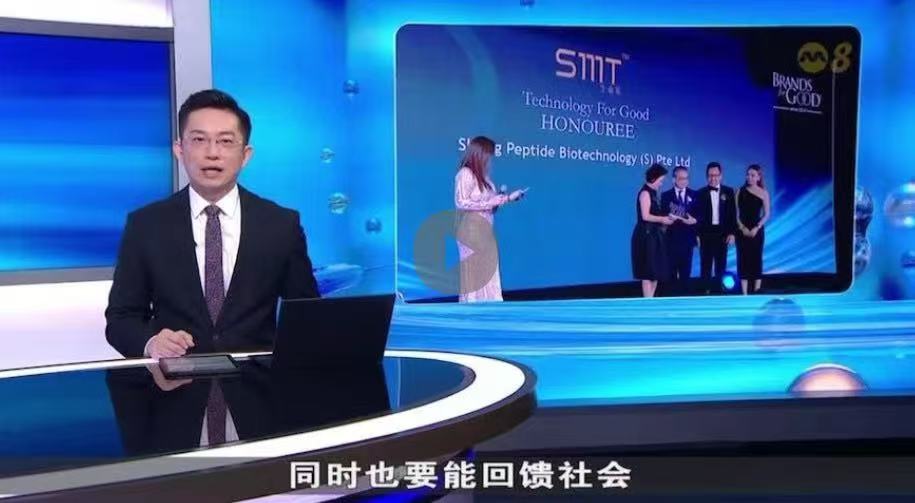
Honoured at the Channel 8 Singapore awards for innovation in wellness.
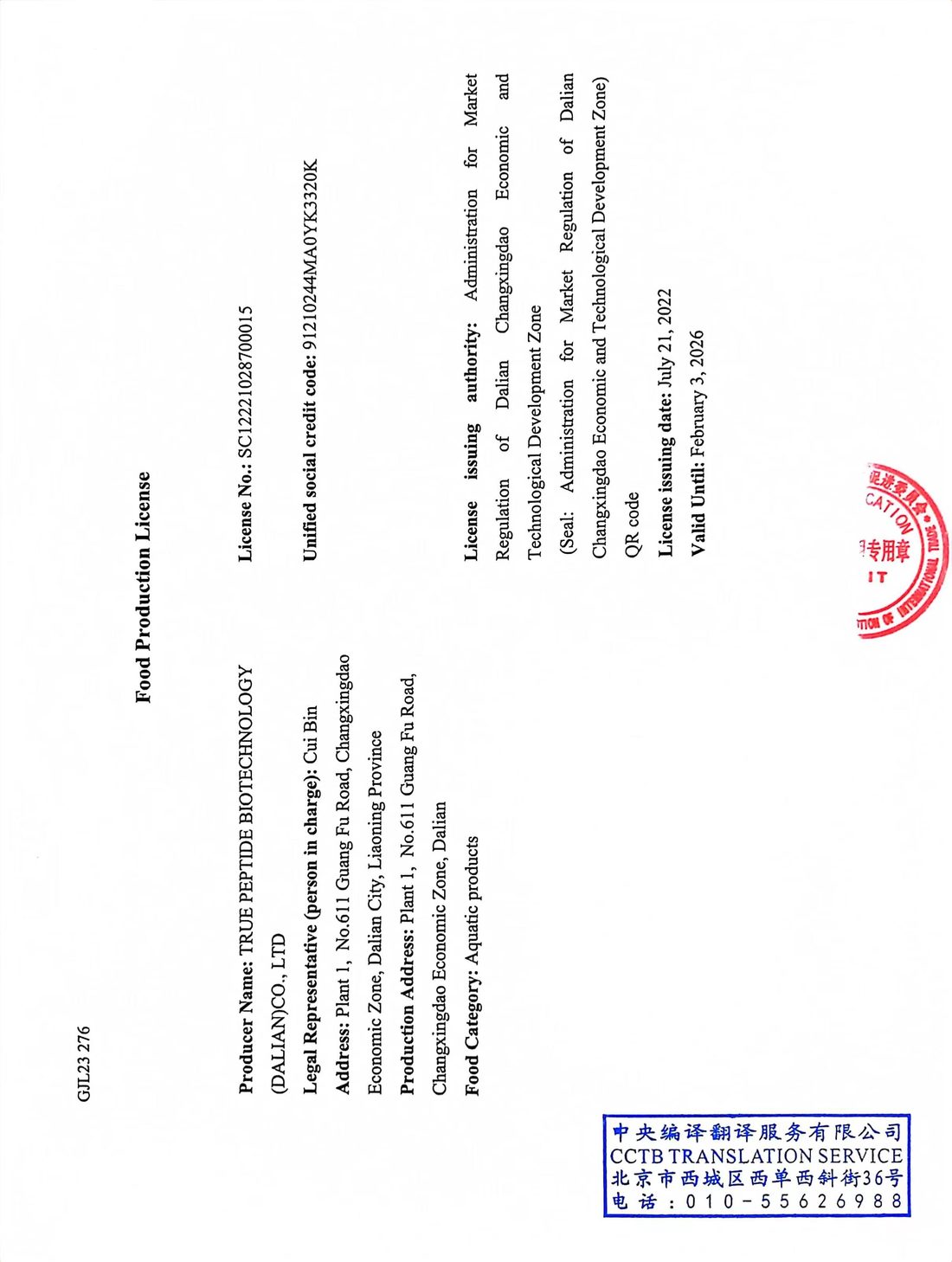
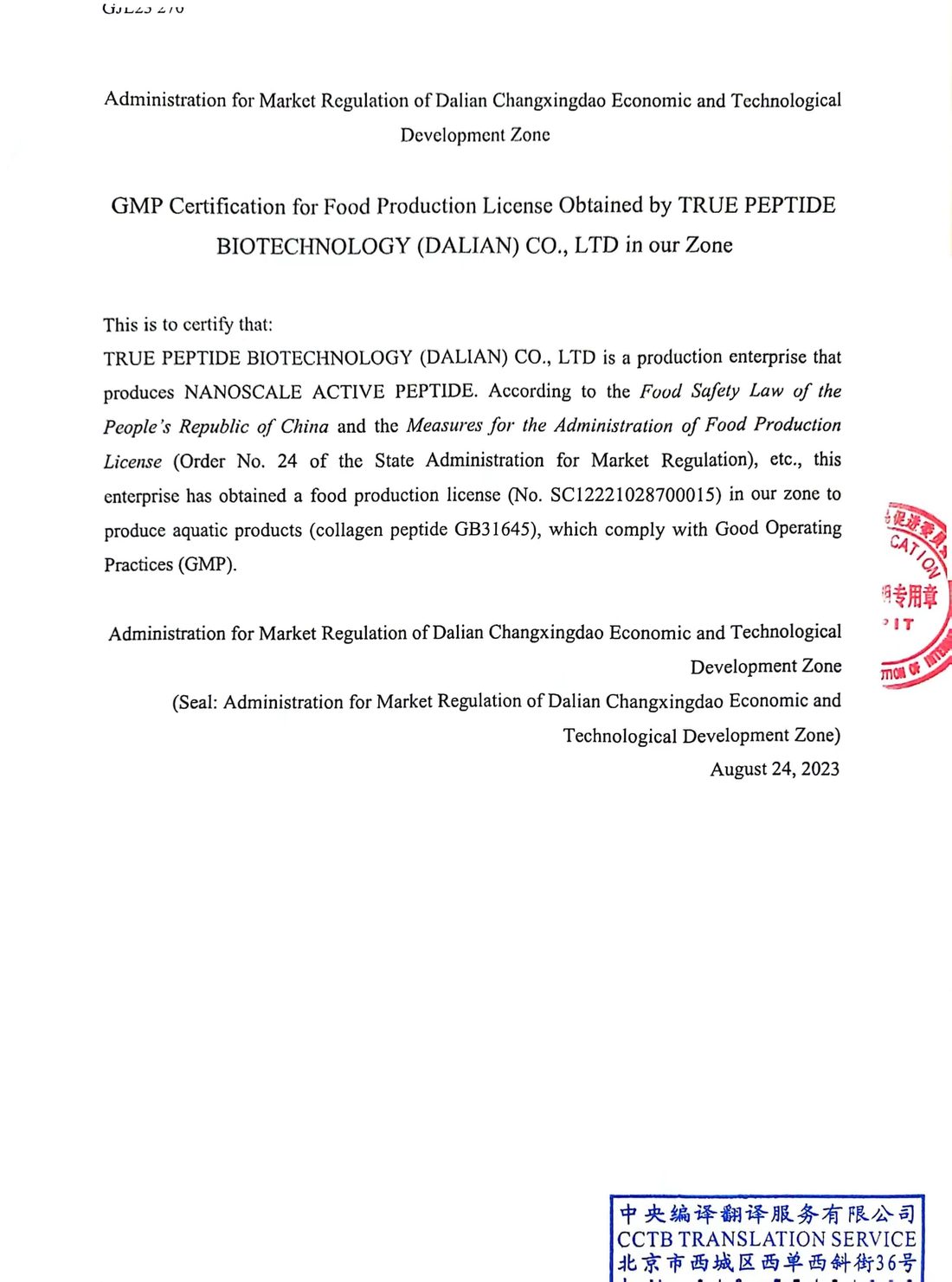
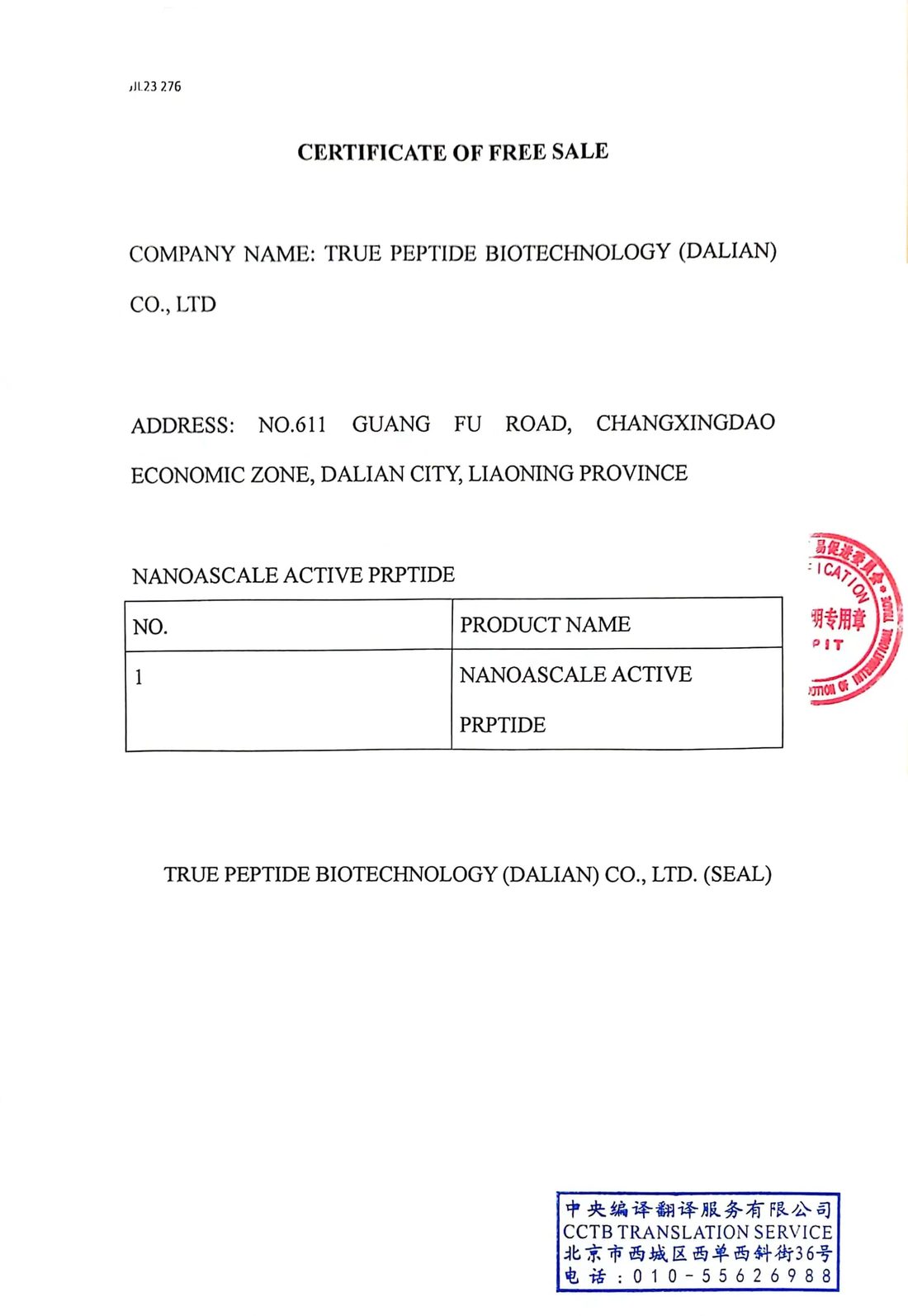
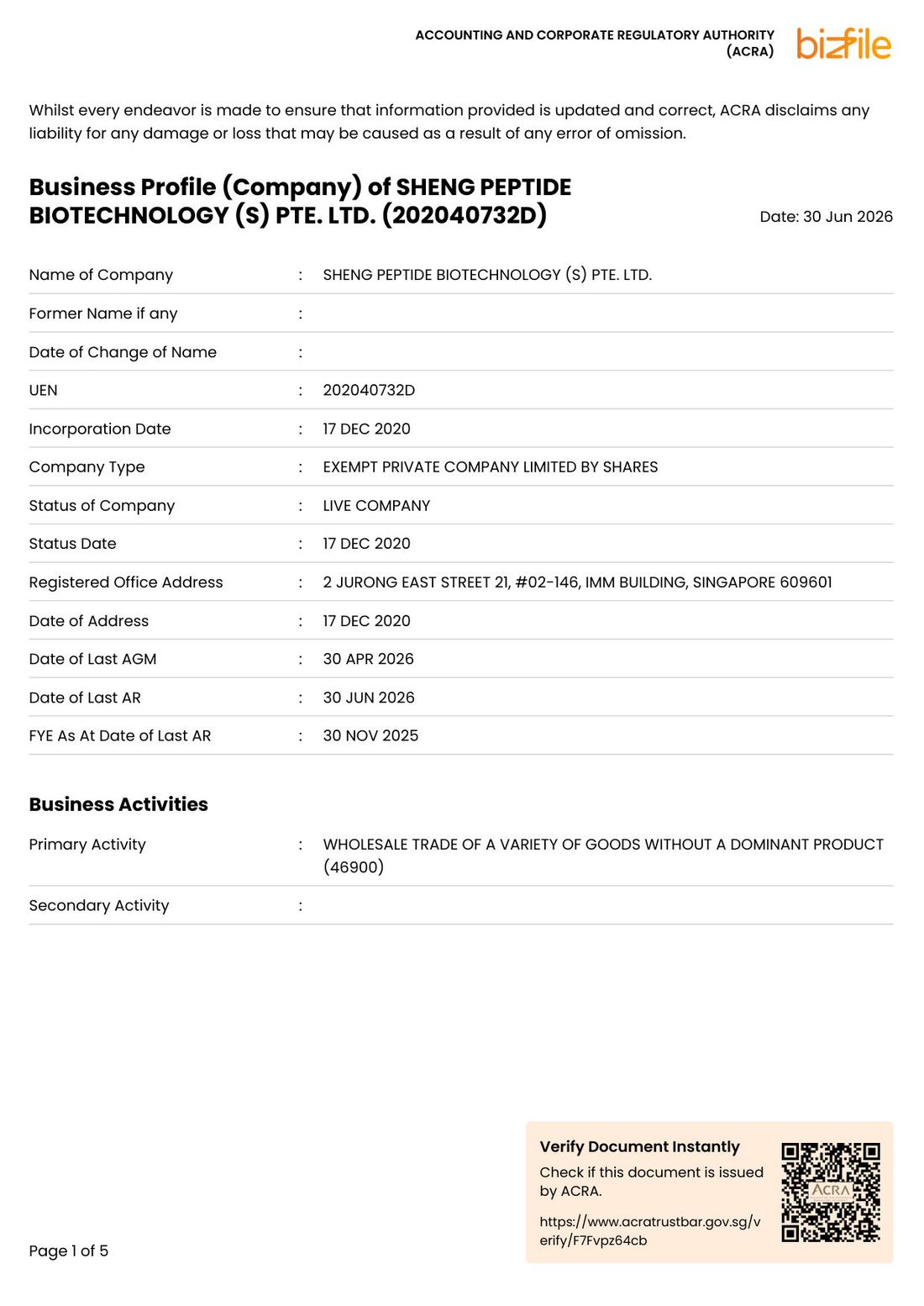
Channel 8 Official Site ↗Every batch is tested by independent laboratories. Click any report to view the original PDF.
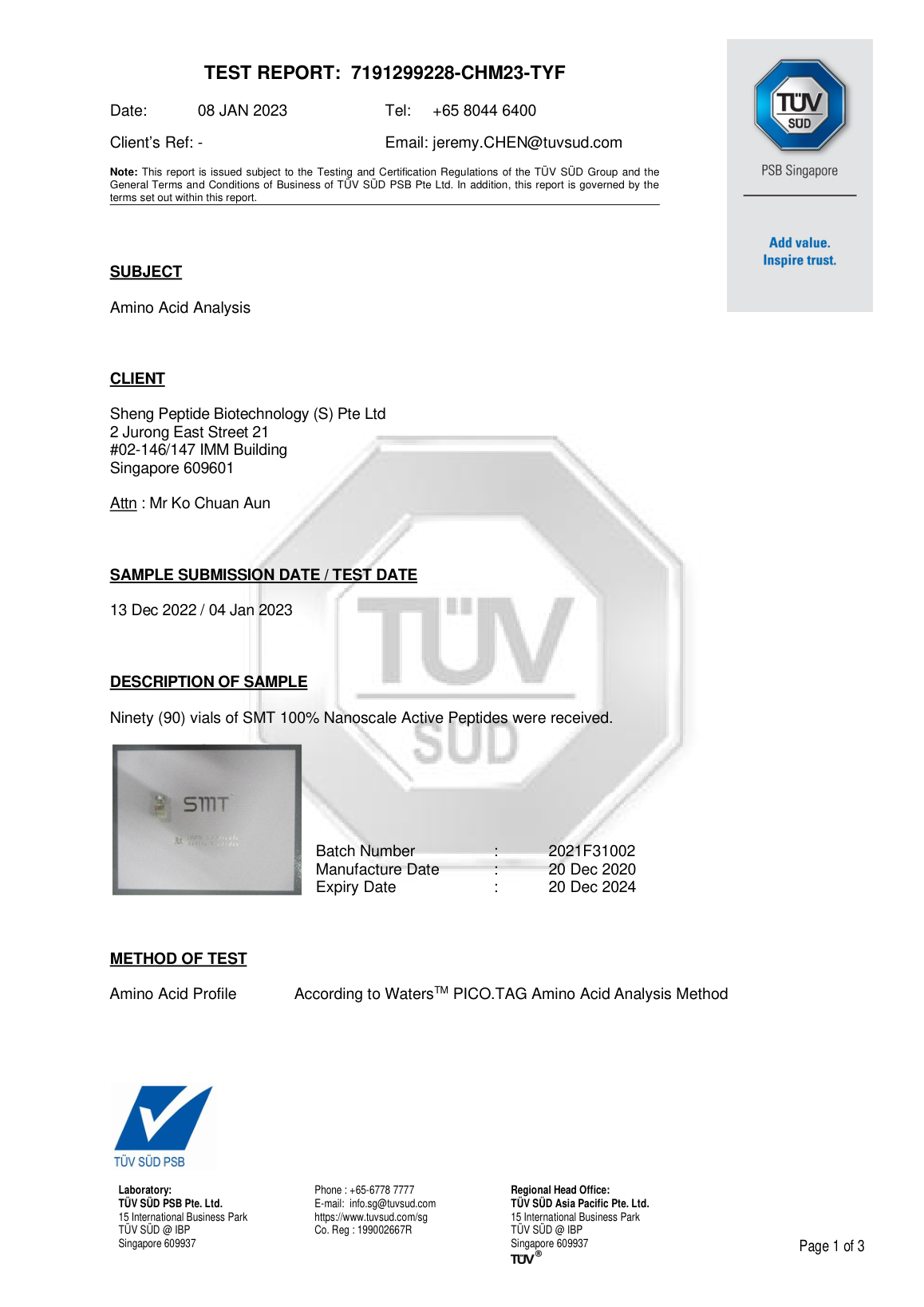
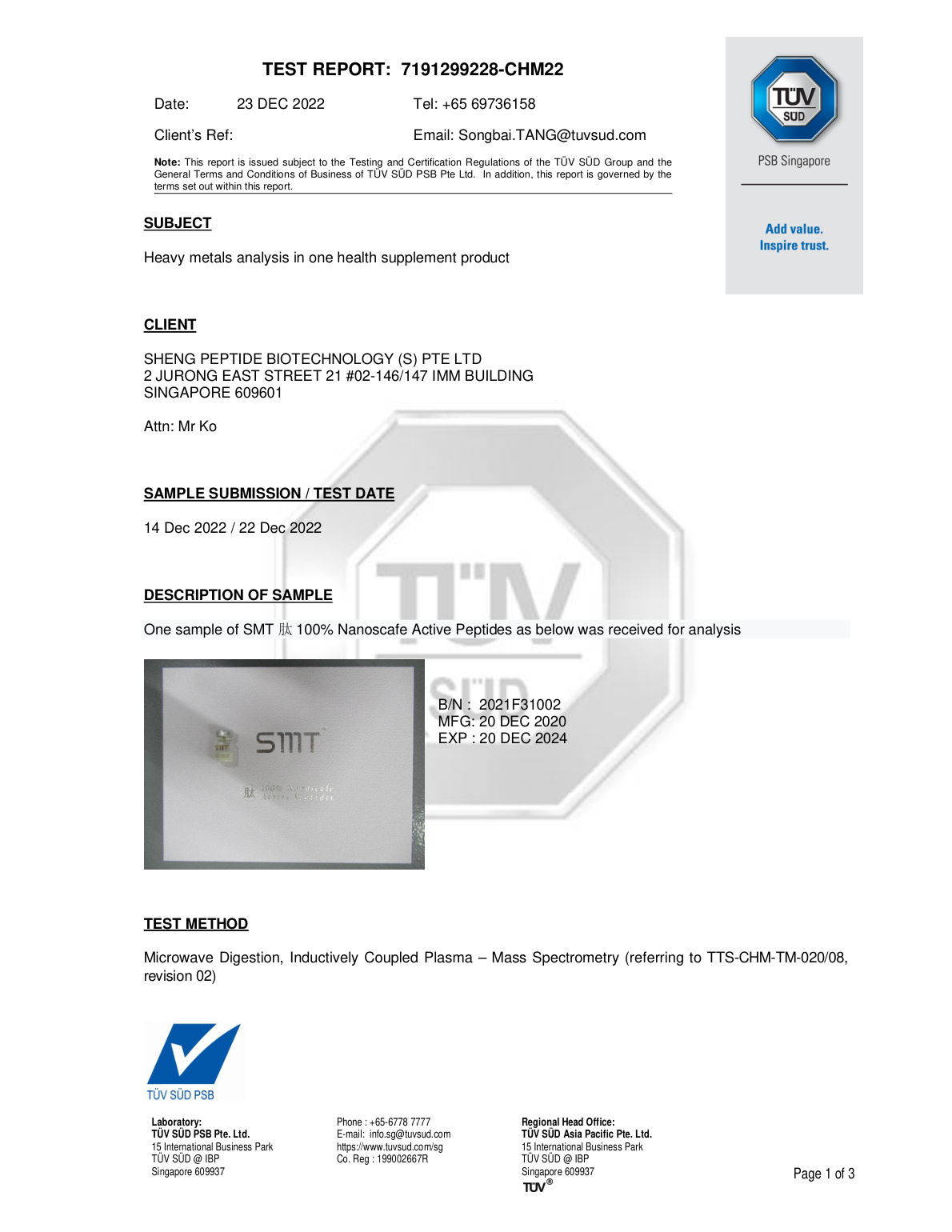
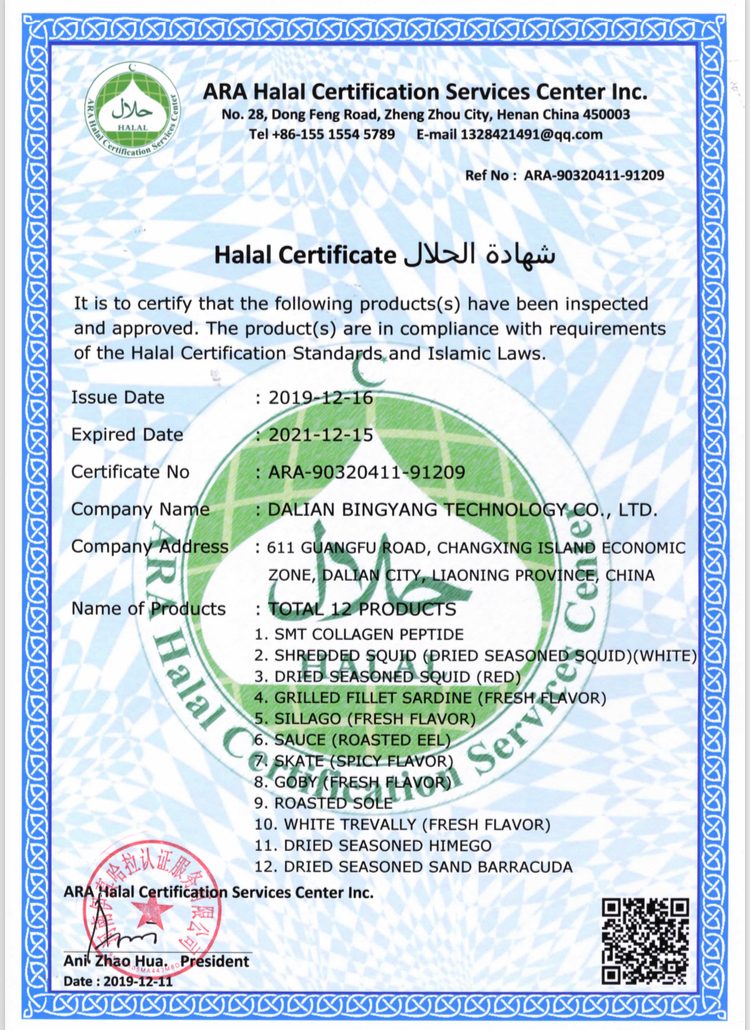
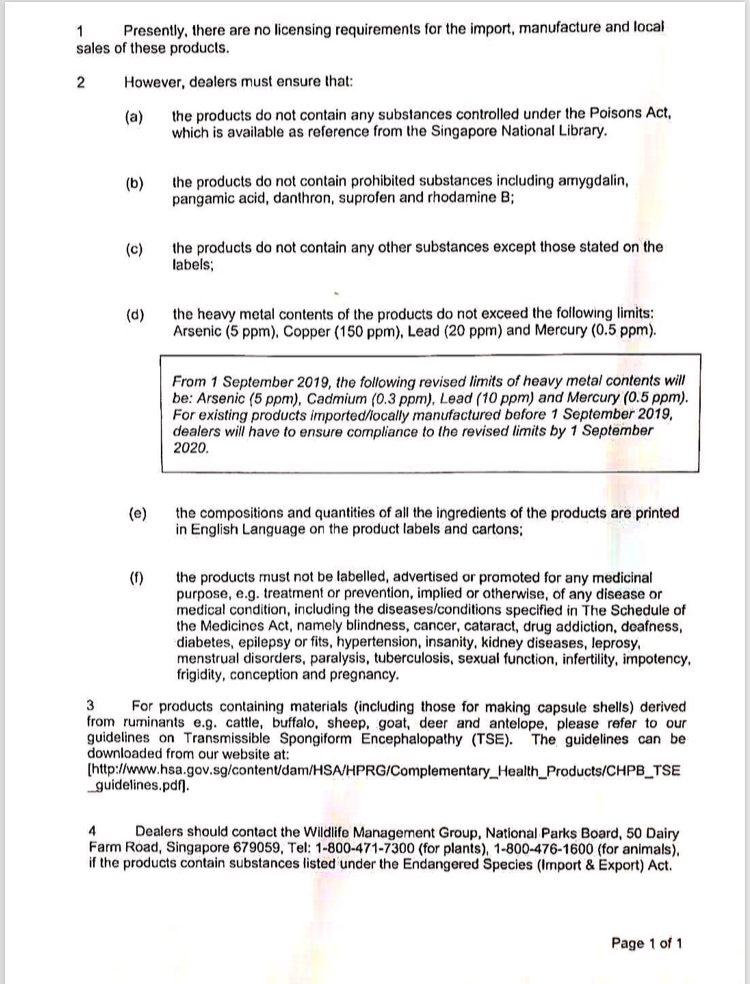
An independent German testing body verified the amino acid profile and heavy metal safety (As/Cd/Pb/Hg <0.1 ppm, within HSA limits).
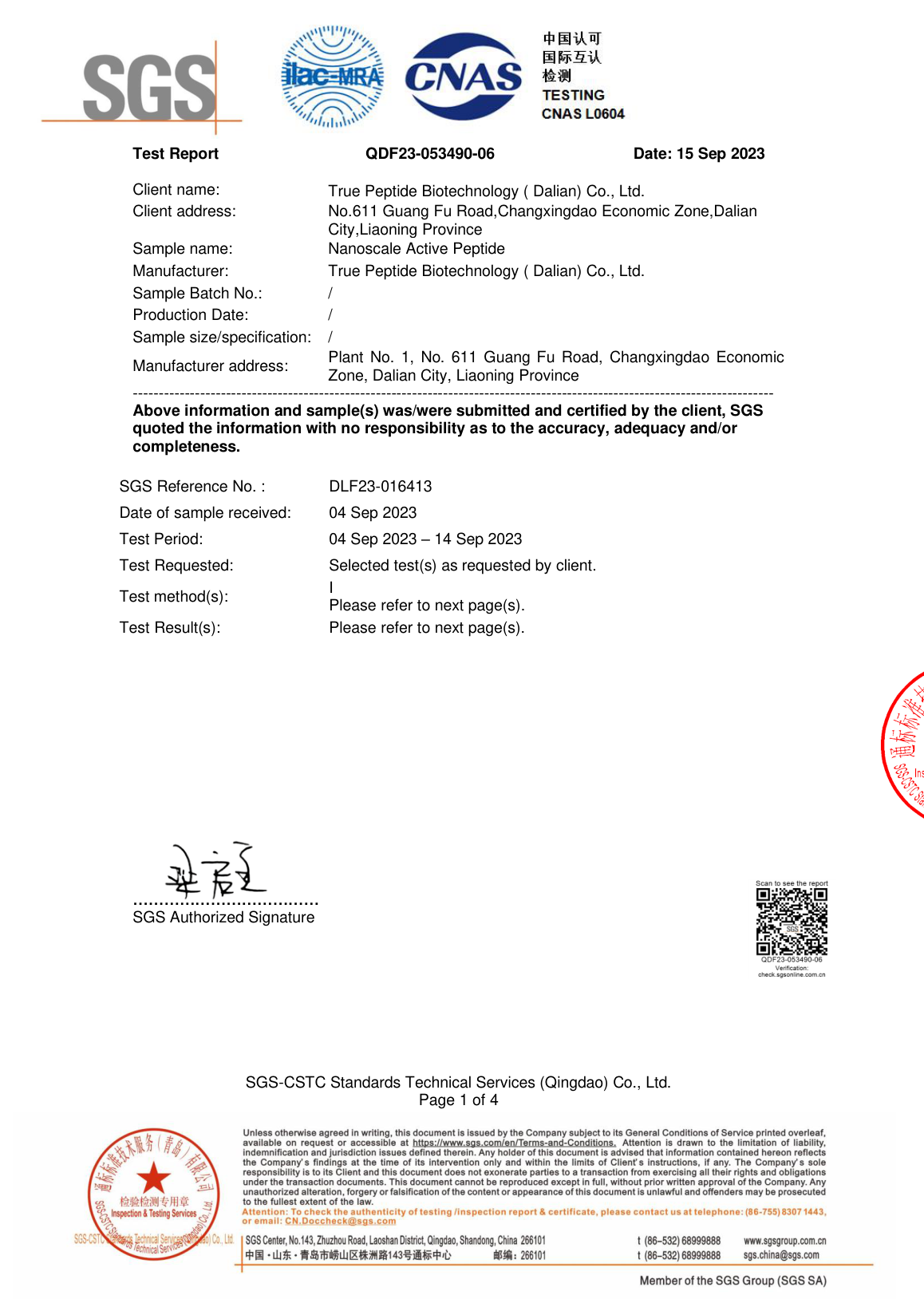
One of the world's largest testing and certification organisations issued the quality test report for the nano-active peptide.
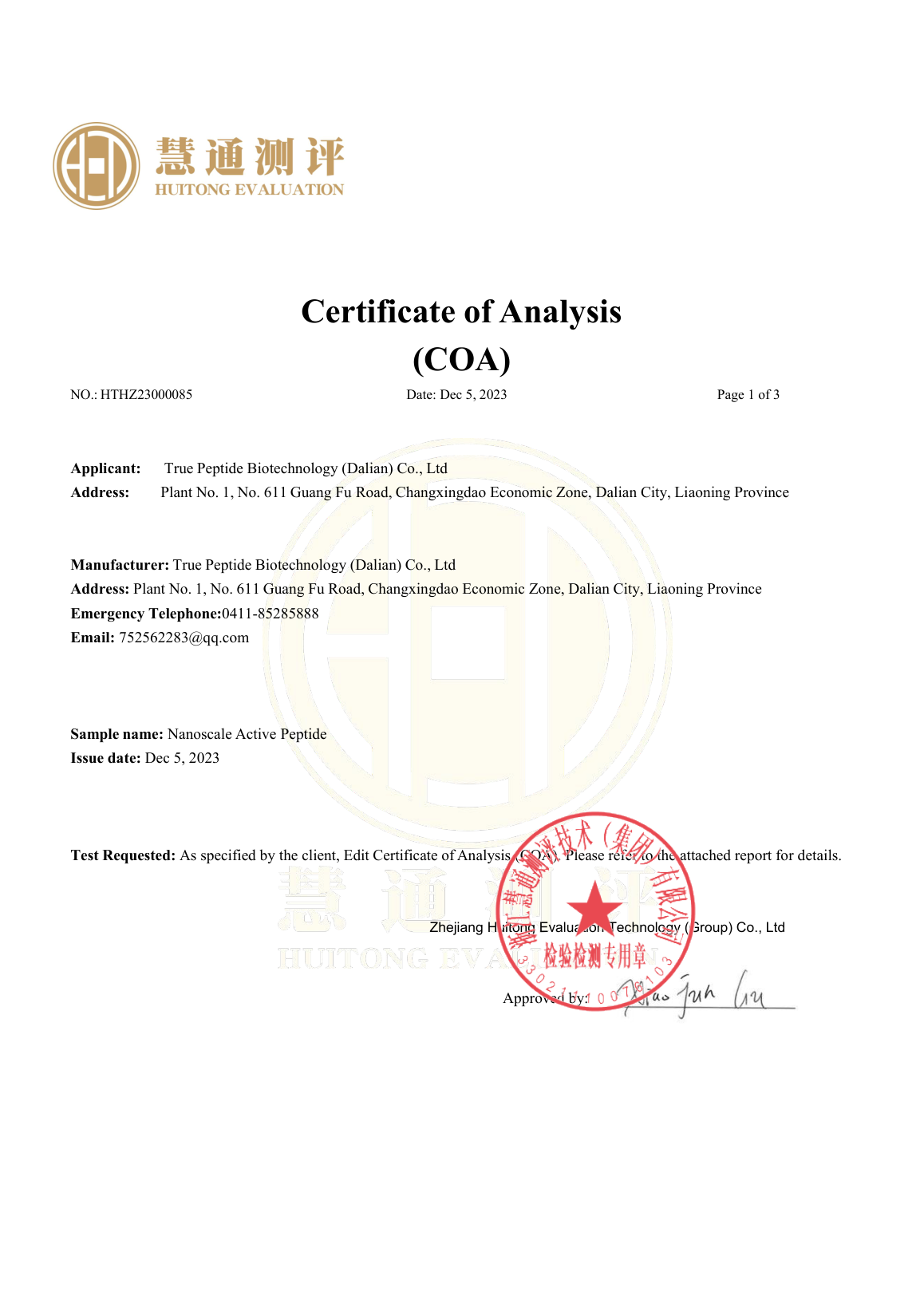
The Certificate of Analysis confirms the composition and quality of each batch of nano-active peptide.
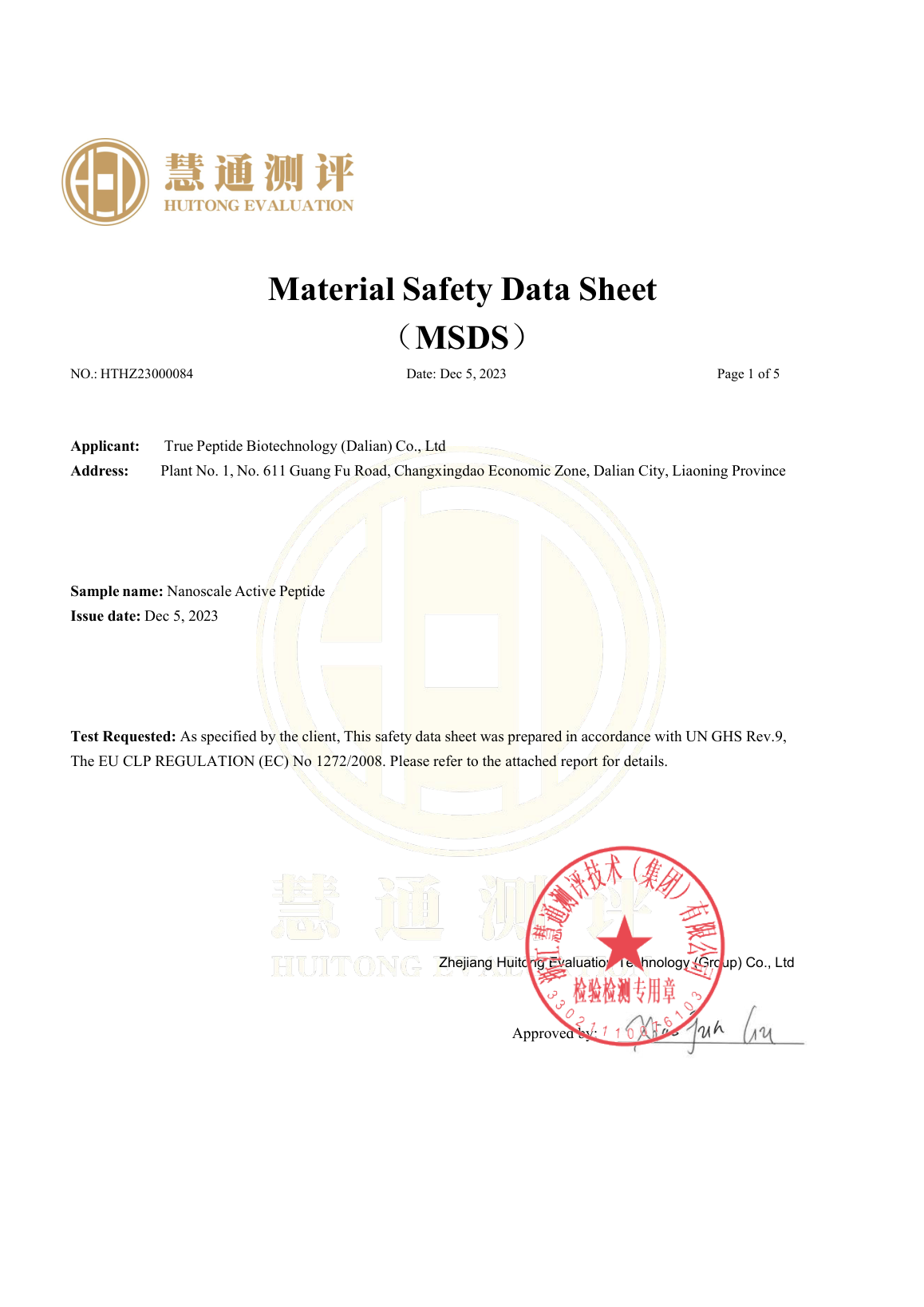
The Material Safety Data Sheet (UN GHS Rev.9) documents safe handling, storage and transport information.
ZL201210517035.3 protects the collagenase-producing strain at the heart of SMT’s nano-peptide production — the core of what makes SMT different.
SMT is the result of more than 12 years of continuous research — from a single deep-sea strain to a precision nano-peptide.
Patented in 2012 and officially launched in 2019 — the technology behind SMT was refined for more than a decade before reaching the market.
Research partnership with Changchun University of Chinese Medicine and the Jilin Provincial Ginseng Science Research Institute.
Peer-reviewed paper on the PI3K-Akt signalling pathway in insomnia, first published online in the Chinese Journal of Hospital Pharmacy (2024).
2–4 peptide chains with ≥99% below 1000 Da and total amino acid content of 99.21% — verified by independent laboratories.